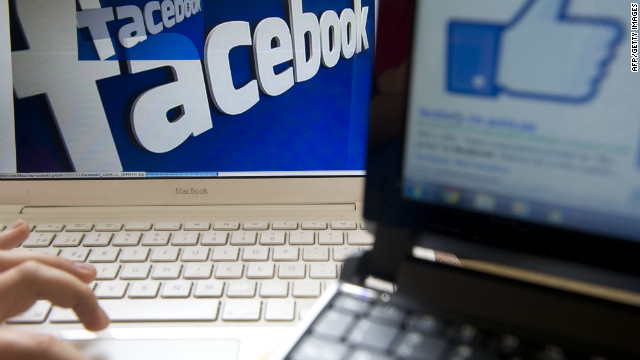
In Facebook launches 'Camera' photo app, a CNN article published last Friday, John D. Sutter announces that Facebook launched a photo-sharing app called Facebook Camera last Thursday, which "aims to make it simpler for the social network's users to upload and browse photos on smartphones." Interestingly enough, the release came only weeks after Facebook spent $1 billion to reserve the rights of a similar photo-sharing application called Instagram.
Just like with Instagram, users will be able to view and upload a feed of photos from and for those in their Facebook social circles. One can swipe to see more of any album or tap a photo to increase its resolution. For someone like me who enjoys photo updates on my Facebook homepage more than any other kind of update, this application may come in handy.
This could prove to be useful for citizen journalism in a sense. For example, people will be able to post pictures of themselves at the site of a news scene, or detailed images of the same scenes. Since Facebook boasts about 900 million users(rougly 800 million more than Instagram users), it will be interesting to see how this application furthers the possibility of regular citizens playing an active role in processes of collecting, reporting, analyzing and disseminating news and information. On the other hand however, it might prove to be the beginning of the end for particular individual rights that come with citizen journalism. Facebook is essentially monopolizing the online social media hemisphere, while it continues to own more and more of the information that its users are uploading/sharing, personal photographs being more vulnerable to corporate ownership this time around.
A blog about digital journalism created by UC San Diego upper-division Communication students
Showing posts with label Facebook. Show all posts
Tuesday, May 29, 2012
Saturday, May 26, 2012
Facebook helps man prove innocence
Brian Banks a former high school prep star, served a five year jail sentence. He served time for kidnapping, and rape charges. He spent five years in jail, because he took a plea deal, rather than going to trial and potentially face a forty-one year prison sentence. Banks played high school football at Long Beach Poly High School, and was recruited by the University of Southern California.
Once, Brian Banks completed his time in Jail, he was contacted by his accuser on facebook. Originally, his accuser requested him as a friend, and naturally he refused. Later they would agree to meet each other, along with Brian Banks private investigator. Wanetta Gibson(the accuser) agreed to have the meeting recorded. During the meeting, Wanetta confessed that Brian Banks did not rape, or kidnap her. Through this meeting, Brian Banks was able to be acquitted for any wrong doing. He plans to receive payment for his time he served, by the state of California.
| Brian Banks crying after being acquitted. |
Banks claims that he has forgiven Wanetta Gibson. He is hoping to tryout for an NFL team at sometime. Had I been in Brian Banks shoes, I would have tried to sue the State of California for no less than ten million dollars. Because, Brian Banks very well could have signed lucrative contracts in the NFL, had he not went to jail. Looks like facebook has helped cleared Banks's name.
Monday, May 21, 2012
Advertising Tactics on Facebook Games
Lately, I’ve been addicted to this game called Tetris Battle
on Facebook, I haven’t actually played many of Facebook’s games, except for Pet
Society, of which I’ve played two years ago.
I remember being able to play Facebook games for as long as I want, but
I noticed now that Facebook has limited game playing time with what’s called
energy. It has a picture of a battery
and has a certain ratio. For every round
of Tetris you play, it takes away 5 points from your battery. If you run out, you can’t play anymore. Yet when you want to play more so that you
can beat your opponent, who comes to the rescue? Advertisements.
Advertisements are now being used as a part of the game,
where if you watch videos or take consumer surveys, one can gain more energy,
or items needed to play the game. It
seems that Facebook games have incorporated the design of the game to cater to
encouraging users to watch the advertisements.
The advertisements themselves do not last past a minute and a half,
which is bearable, and some advertisers do limit the number of times the video
can be watched, but does this really affect the Facebook user’s consuming
habits? I do something else like check
my email or play a different game, while the video is playing until I can play
Tetris again.
Advertising in games is not a new strategy, but having the
advertisement built into the game is. In
class we’ve discussed how games are used to spread news on a particular
issue. Yet, advertising companies are
able to spread their influences on games as well. The games designed for news and games
designed with advertisements are different because the ones designed for news
puts the player in the experience of the issue.
Advertisements still have a hands-off approach, keeping to the sidelines
outside the game and when the player needs more life or items, they go to the
advertisements. It’s a lot more subtle and seems to be more
tolerable to game players.
Facebook does not produce the games themselves, but do host
a number of game apps. They have even
made their own virtual currency called Facebook credits that can be used in any
game app. One can either earn the
credits or purchase it with real cash.
Saturday, May 19, 2012
What Companies That Manage Brands on Social Media Have to Say About Facebook.
In a recent post by Sarah Fier on Bloomberg, the truth about what social media advertisement agencies have to say about Facebook is revealed. The moment General Motors Co. decided to pull their ads off of Facebook, a discussion began about how companies that manage brands on social media truly feel about the effectiveness of Facebook. Frier mentions big social ad companies such as Adaptly, 22Squared and AdParlor that work with even bigger companies such as PepsiCo Inc. and Kraft Foods Inc., Florida's Natural Orange Juice and Baskin Robbins. She talks about the discussions that have gone around among these companies about their not-so-confident thoughts about the effectiveness of having their ads up on Facebook. There is definitely a sense of disappointment and frustration with Facebook and the tremendous costs that comes along with it that doesn't necessarily promise the best advertising outcomes: “It is not easy for a brand to get Facebook advertising to work,” Chief Executive Officer Hussein Fazal said. “It’s not just about plastering the site with ads. Facebook advertising can only be effective if you have specific end goal in mind. Do they want to drive users to local dealerships? Or are they just trying to get people to ‘Like’ their brand page? There are different strategies for each." (What Social Media Ad Agencies Say About Facebook).
Thursday, May 17, 2012
The Future of Facebook Journalism
Today, Facebook raised about $16 billion by selling approximately 421 million shares at $38 each, following through on the private company's initial public offering (IPO) announcement this past February.
According to Reuters, investors have been eager to purchase shares that may deliver "big, even astronomical returns -- a rare opportunity in today's low-yield and turbulent markets." Now that Facebook has to answer to its shareholders as a publicly-traded company, its focus will certainly shift to the emphasis of money-making. With Wall Street grinning from ear-to-ear with Facebook's high profitability prospects, what does the addition of another player mean to the game of Facebook journalism?
Kristie Lou Stout delves into this increasingly complex question in her article, "Is Facebook a must-buy for journalism?" She asserts that because Facebook has transformed into a public entity, journalists (as well as the millions of other Facebook users) are now merely a product being sold.
She questions the need for journalists to utilize Facebook as a tool for news sharing and various other forms of journalistic expression, arguing that its only benefit now is to create a "personal brand" catered to mass consumers.
Though it is unarguable that Facebook's move to go public will not affect the dynamic of Facebook Journalism in some way or another, there is certainly more merit to the usefulness of Facebook than Stout would believe.
Journalists and news companies have already made a significant presence on social media platforms like Facebook, engaging almost personally with its audience base whilst facilitating the notion of "trusted referral." Trusted referral is essentially Facebook's greatest gift to journalists -- the wildfire spread of content via shares and likes brings credible news and information to the forefront of a friends' eyes.
Facebook has not only become a useful tool for seasoned, professional journalists, but to the Average Joe as well. Regardless of Facebook's newest alliance with Wall Street, citizen journalism will continue to find its way into the newsfeeds of the platforms 900 million users.
Though some would argue that the IPO announcement of Facebook places the future of Facebook Journalism at stake, I believe this is not the case. Surely, the dynamics of the social site will continue to change (as it has been with the constant re-introduction of layouts), but that will not stop the word from getting out. Many of us have been accustomed to having Facebook as an almost integral part of our lives -- and even in our social revolutions -- that public trading will not change that.
The future of Facebook Journalism will continue to stay ours.
| Source: http://www.cnn.com/2012/05/17/tech/facebook-journalists-stout/index.html |
Kristie Lou Stout delves into this increasingly complex question in her article, "Is Facebook a must-buy for journalism?" She asserts that because Facebook has transformed into a public entity, journalists (as well as the millions of other Facebook users) are now merely a product being sold.
She questions the need for journalists to utilize Facebook as a tool for news sharing and various other forms of journalistic expression, arguing that its only benefit now is to create a "personal brand" catered to mass consumers.
Though it is unarguable that Facebook's move to go public will not affect the dynamic of Facebook Journalism in some way or another, there is certainly more merit to the usefulness of Facebook than Stout would believe.
Journalists and news companies have already made a significant presence on social media platforms like Facebook, engaging almost personally with its audience base whilst facilitating the notion of "trusted referral." Trusted referral is essentially Facebook's greatest gift to journalists -- the wildfire spread of content via shares and likes brings credible news and information to the forefront of a friends' eyes.
Facebook has not only become a useful tool for seasoned, professional journalists, but to the Average Joe as well. Regardless of Facebook's newest alliance with Wall Street, citizen journalism will continue to find its way into the newsfeeds of the platforms 900 million users.
Though some would argue that the IPO announcement of Facebook places the future of Facebook Journalism at stake, I believe this is not the case. Surely, the dynamics of the social site will continue to change (as it has been with the constant re-introduction of layouts), but that will not stop the word from getting out. Many of us have been accustomed to having Facebook as an almost integral part of our lives -- and even in our social revolutions -- that public trading will not change that.
The future of Facebook Journalism will continue to stay ours.
Monday, May 14, 2012
The Facebook Era
In Vargas' article "Our Facebook: Led by Mark Zuckerberg, We Define an Era" he asks us some important questions to consider while the news of Facebook becoming public rapidly increases. Vargas asks " What value do we place on privacy and our identity? Is there a price tag for our connections and our relationships?" (Vargas) The news of Facebook going public does not only create a financial statement but a worldwide statement. Through Facebook, social media has matured and what makes Facebook so unique is that unlike Google and Apple, Facebook is personal. As Vargas points out "You go to Google to, say search for a doctor; you go to Facebook to interact with a friend."(Vargas) What also makes Facebook unique is that ordinary people from all parts of the world have invested our life in Facebook which makes the social networking site not only Zuckerberg's but ours as well. "Facebook is, at heart, what you make of it. The site is only as serious or as trivial as the people who populate it. For many it's nothing more than an addictive and irresistible distraction. For others, however, it's downright revolutionary and liberating."(Vargas) Take the young Egyptians for example, who used Facebook as a tool to help overthrow a dictator.
Facebook users are concerned about their privacy on the site because through those settings they have control over how they choose to define themselves. Facebook has become more than just a social networking site but a part of our lives and daily routine, we check our Facebook several times a day, on our phones we're notified of comments and the like, we add "friends" after we meet them, post photos of our lives, etc. All these personal investments we have made have now created a multi-billion dollar business and this is due to our involvement.
Zuckerberg explains that "Facebook was not originally created to be a company"(Vargas) but was originally created with a "social mission -- to make the world more open and connected."(Vargas) I think it is safe to say Zuckerberg was successful in his "social mission" but if it we not for us participating Facebook would not be what it is today. Zuckerberg has been compared to Bill Gates and Steve Jobs, and both, Zuckerberg admits were mentors to him. However, Zuckerberg may prove to be even more influential in our lives because unlike Gates and Jobs who deal with computer software, Zuckerberg is "dealing with people and our evolution from being privet citizens to having public identities."(Vargas)
The investments made by users of Facebook to the site has created the Facebook we know and use today. Facebook will continue to grow and change, but its worth inevitably depends on the trade between Zuckerberg and the users following and leading one another, because unlike other companies that only answer to highs and lows of the stock market, Zuckerberg also has us to answer to us especially in regards to our identity and privacy.
Photo Credit: http://www.nytimes.com/2007/12/03/technology/03facebook.html?_r=1
Thursday, May 10, 2012
Nonprofits harnessing Facebook and Twitter
The article Have You Friended Your Favorite Cause? written by Alan Greenblatt discusses the relationship of social media networks and nonprofit organizations. Donate Life America has teamed up with Facebook in registering organ donors. NTEN, Common Knowledge & Blackbaud conducted a survey that found "the average nonprofit's fan or follower base grew by 30 percent on Facebook and 81 percent on Twitter 2011."
Nonprofit organizations can use social media platforms to help bring their cause to the minds of millions. They must however have a way of reaching them. Just because an organization has a Twitter or a Facebook doesn't mean they will automatically gain followers. People follow other groups for a reason, these groups must offer something of interest to their audience, which brings me to my first point, that these groups have an audience that they must cater to. An audience in the social media sphere has an attention span that is very short and seems to be getting shorter as the days go by. Organizations must take into account that people are busy and don't really have time to read a four page article filled with things they just don't have the patience to read through anymore. They are instead turning to the 140 character limits of twitter to tell their story. This can present as many opportunities as there are challenges.
These stories give people a reason to follow their organizations. They must intrigue the reader and get them attached to the organizations so the organizations can get the information out to their followers. One way that they can do this is by offering their audience a behind-the-scenes look at what goes on in the corridors of their cause. Sometimes these big and famous nonprofits can become dehumanized and it is a refreshing experience to be able to interact with those who are working on things that their followers truly care about. These social networks allow their followers to interact with these big nonprofits. It gives a reader the ability to be noticed and interact with people they usually just read about or see in photos.
Facebook and Twitter are still ever evolving platforms in which we all have to adapt to. These companies are still working out how to harness the power of this media to its advantage. They see the opportunities and challenges and obviously with the success of the Red Cross who raised $33 million dollars in aid by using twitter and Donate Life America's organ donation registry teaming up with Facebook it is a worthy place for nonprofits to look into.
Tuesday, May 1, 2012
Did Facebook start a Revolution?
After the revolutions in Egypt and Tunisia many people have argued that Facebook was responsible for these revolutions. It is important to value and critically analyze how the role of social media has been use as a political tool to bring change but without undermining the people who sacrificed their time, lives and families to bring about this change. A more in depth and research essay, Streetbook: How Egyptian and Tunisian youth hacked the Arab Springby John Polluck in Technolgy Review, traces when Tunisian activists first started organizing online.
Polluck follows two Tunisian leaders from the organization, Takriz, that helped mobilized thousands of people against Tunisia’s president Zine El Abidine Ben Ali. He traces their use of internet since 1998. Waterman (real names are unknown) recalls “that the internet was the only viable option for organizers in 1998”. Since 1998, Pollock explains how more Tunisians entered the virtual world but the numbers were very limited due to Ben Ali’s censorship. By the year 2009, the numbers dramatically changed and more than 800,000 Tunisians had a Facebook.
Polluck emphasizes how Facebook and other social networks function as a medium to spread awareness and mobilize thousands of people into massive anti-government protest. Facebook enabled people to see and share video and photos of police brutality and raised momentum for movements such as “We are all Khaled Said”. It also helped guide the protests by spreading events on the times and places where they were occurring.The strategies and media tools used by Tunisian activists greatly influenced and inspired Egyptian civilians to mobilize. Polluck describes how “Egyptian activists were following the events in Tunisia, learning from them, and even communicating with some of the leaders -- over Facebook, of course. When one of the Egyptian movement's leaders heard the news from Tunisia, he started texting: Ben Ali gone. Possibility”.
http://www.technologyreview.com/web/38379/
Monday, April 30, 2012
If You Can't Beat Them Join Them
{Photo credit: http://www.dudelol.com/grandma-on-facebook/}
http://www.insidefacebook.com/ is a website that keeps track of its users data and analyzes how facebook is being used; it has found that it's fastest growing demographic is women over the age of 55. These women could include everything from grandma wanting to see her grand kids faces or a mom - stalking her kids while they are away at college. The point is this crowd is using facebook as a tool to keep informed. Unlike Facebook's younger users who often join Facebook to connect with current friends in high-school or college Facebook's older users are drawn to the possibility to connect with friends they have not seen in years and family members who they do not see often enough.
It is more difficult for some older users to learn how these social media outlets work, but generally once they have the will and patience to learn they become more comfortable with it. It can be a foreign concept to some because they are not accustomed to technology and because of the way it is taught. An elderly women in the article comments "Most things in the world we learn from elders, but technology is the realm we learn from the younger generations." Older generation are being taught the ins and outs of social networking sites by their younger relatives or now many Senior Citizen living communities are offering classes on it as well. Some older generations tend to shy away from social networking sites is because they feel it is an invasion of privacy and it may feel uncomfortable and unnatural broadcasting certain information about themselves. Because of this, older Facebook users are more likely to comment on others postings and photos than initiate. As the older generations become more comfortable with Facebook, some claim other sites such as Twitter are still very intimidating for them and they do not see themselves participating in the near future. They are taking baby steps to become a more tech savvy crowd.
Sunday, April 29, 2012
Vigilantism vs. Journalism
Joan Walsh, a writer for Salon recently did a piece on an article written by Arthur Brisbane of the New York Times, where Rick Santorum misrepresented John F. Kennedy's speech on religion during the 1960's. Walsh has been under praise by people on many social media websites such as Facebook and Twitter for her work. She reveals in her article that what she did was nothing complex, rather a simple google search (Salon.com). The dichotomy between journalism and vigilantism is expressed when Walsh talks about how good reporting has nothing to do with being a vigilante for truth. Scott's article on the blogosphere, talks about the "blog trimphalism" where the involvement of bloggers during the 2004 presidential campaign lead to the forced retirement of Dan Rather, a CBS anchor. Fact checking was a large part of this movement and it is perfectly depicted here. What bothers me is that even though Walsh was late to the story, nobody stood up to disapprove of Brisbane's article, and I am assuming this is because of the trust we have within large media outlets. Walsh commented that:
"I assumed I’d be late to the Santorum story because I was sick yesterday and didn’t even watch him live, I just heard about his remarks online. "
Even a large trust worthy media outlet such as the New York Times that many readers whole heartedly trusts, make factual mistakes such as this.
http://www.salon.com/2012/02/27/we_dont_need_truth_vigilantes/singleton/
Saturday, April 28, 2012
Social Media Transforms the World of Sports
You can spot the effects of social media integration in journalism everywhere these days. One news division that social media outlets affect significantly lies within the realm of sports. Not surprisingly, sports fans now prefer to obtain their sports news from social media outlets, such as Twitter and Facebook, rather than national news websites. In the event that a fan reads about the field goal percentage of his/her favorite football star, that player's Twitter handle will appear on the bottom of the article, just for kicks.
An infographic(which can be found here: Sports Social Media) from the sports medicine company KT Tape details the specific ways in which social media has changed the sports world during the last four years.
"Box scores and game recaps can still be found in the newspaper and on TV, but fans are looking for more than that now. They want live updates, active participation, and behind-the-scene looks at their favorite sports teams and players. Social media has given sports fans virtual box seats."
"To engage sports superstars, fans used to have to write letters or hang around after the game to try to get their ball or card signed. Now, social media allows fans to reach the players. Some professional athletes specifically go out of their way to engage their fans, which can pay off for the athletes in some cases."
The above infographic shows that as Twitter and Facebook continues to revolutionize, change and personalize consumer culture, news outlets have to welcome social media to "the game" in order to sustain their operations.
Thursday, April 26, 2012
A Recent Development in "Facebook Journalism"
It's late at night...1:30 a.m. to be exact. I have work to do, yet of course, I have no problem clicking into Facebook to see what my friends are up to.
Like many others, I now have the new "timeline" feature. That took enough getting used to. Now, I see a strange "Trending Articles" on my newsfeed. It looks a little something like this.
This relatively new feature includes a short synopsis of the trending article - in this case "Larry Brown blasts Michael Jordan's Charlotte Bobcat..." - and I can see that my friend and two others have read this article. Interesting.
Facebook seems to be on its path tosocial media Internet domination, with its new and evolving way for its users to click on and read news articles that their friends have previously read and found interesting enough to link.
For more information, check out this article from Mashable Social Media.
Like many others, I now have the new "timeline" feature. That took enough getting used to. Now, I see a strange "Trending Articles" on my newsfeed. It looks a little something like this.
This relatively new feature includes a short synopsis of the trending article - in this case "Larry Brown blasts Michael Jordan's Charlotte Bobcat..." - and I can see that my friend and two others have read this article. Interesting.
Facebook seems to be on its path to
For more information, check out this article from Mashable Social Media.
Wednesday, April 25, 2012
YouTube Parenting: The Modern Punishment
A few decades ago it was socially acceptable for parents to punish their children with violence. A spanking or slap on the wrist to help children learn right from wrong was not seen as child abuse. In modern society, the slightest form of physical abuse can lead to a visit from child-protective services. A recent YouTube video demonstrates how some parents are adapting to the digital age and have reverted from violence to public embarrassment as punishment. Tommy Jordan, the father of a teenage girl, became an internet sensation after posting a YouTube video called "Facebook Parenting: For the Troubled Teen". In this video Jordan describes how his daughter posted an inappropriate and ungrateful status on Facebook complaining about how her parents force her to do chores. To punish her for this Facebook post, Jordan shoots his daughter's laptop 9 times and posts it online for the public eye. With over 32 million Youtube views it is obvious that this video stirred controversy. Some people believe that this video demonstrates terrible parenting and others think that Jordan's punishment was deserved. While the morality of Jordan's punishment is subjective, one thing is certain, this video demonstrates how wide of an audience the internet reaches. In a response to his video, Jordan writes that his parents used to punish him and humiliate him in public places. However, the internet is not just a public moment in time, this video can be viewed multiple times by people all over the world. His parenting in this video can be analyzed by psychologists and will probably follow his daughter for a very long time. Public humiliation has been a tactic of punishment for many parents for decades and, with the advancement of technology, people have access to a much larger outlet for public humiliation. If more parents decide to use the internet to punish their children, it may have an adverse affect on their children's future. Internet posts are easily spread and difficult to erase so a mistake that a child makes at a young age could be public for the rest of their lives. It is common for modern youth to post private things on the internet. However, parents should be wiser than their children and realize that some issues are meant to be private and should not be exploited by the use of the web. There is no question that physical abuse is wrong, but bruises do not leave scars like emotional humiliation.
Thursday, April 19, 2012
FaceBlog
Out of all the social media sites available to the public, Facebook is one of the most prominent. It not only allows individuals to connect with others all around the world, but also provides an outlet for businesses to market their products and has brought a whole new level to viral marketing. Although it may be one of the fastest ways to exchange information, it is often criticized because it allows people to share ideas at the click of a button which somewhat undermines the ideas being shared. With that being said, while I may not use Facebook as a reliable news source, it is embarrassing to admit I often discover breaking news from what my friends post on Facebook; for example, I found out that Osama Bin Laden was dead on Facebook.
From marketing, to connecting with friends, to being a news source, it is obvious that Facebook can function as many different tools depending on the user. Recently I came across a blog called AllFacebook: The Unofficial Facebook Blog that posts excerpts about Facebook all day everyday. It provides information on what Facebook is doing as a company, for example, their recent purchase of Instagram. It also posts information on how to get more "likes" on Facebook, who to market to on Facebook, the war between kids and parents on Facebook and political parties using Facebook. This blog shows just how big Facebook has gotten because it not only has an audience that uses it's site for social media purposes, but also has followers who are interested in Facebook as a brand. In a way, this blog kind of acts like a Facebook for Facebook where people can posts updates specifically about FB and make comments all pertaining to the FB world.
http://allfacebook.com/
Subscribe to:
Posts (Atom)