Corporate participation within social media hasn't been limited to Facebook pages or Twitter feeds, but now the up and coming photo blogging site, Instagram, which most of its users post photos of their personal lives. During the most recent season of American Idol, the entertainment show utilized this platform by regularly uploading photos of contestants behind the scenes and off the studio stage to give the world a personal view. By extending their media interaction beyond the one-way broadcasts on its regular television program, American Idol's social media presence allows audiences to feel more connected to the reality of the show. In a very limited sense, the updates can be seen as both news and entertainment.
While some, however, argue that such updates do not constitute journalism or news in the slightest bit, the disconnect is that these updates aren't purposefully traditional reports in nature. In other words, through digital technologies, journalism has come from a read-only lecture to a participatory conversation. As such, audiences aren't just consumers, but producers and participants. Add this to the way news is consumed: American Idol, whose young viewers access most of their news from instant sources and other social media outlets, had to adjust their media output.
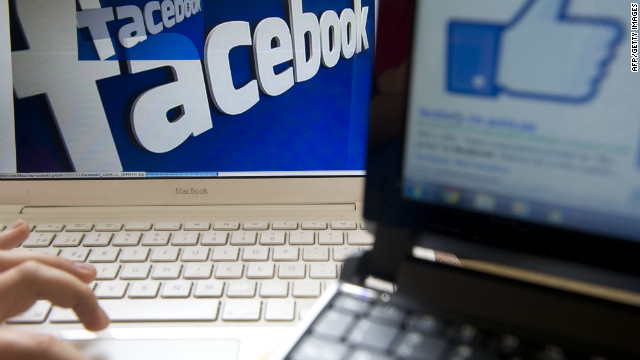
Companies are realizing the necessity for participatory media and their branding strategies. Along with Starbucks, GE, Levis, the list goes on with those using Instagram aside from Facebook and Twitter. With Facebook's recent $1 billion acquisition of Instagram, the corporate presence within social media will become more apparent.
A blog about digital journalism created by UC San Diego upper-division Communication students
Showing posts with label digital journalism. Show all posts
Sunday, June 10, 2012
Monday, June 4, 2012
Why Journalist Are Deterring Students From the Field of Journalism
Many of today’s journalists don’t want to face the fact: the field of journalism has changed and is continuing to change daily. Tim McGuire, the former editor-in-chief of the Minneapolis Star Tribune turned professor, is not one of those people.
In
a recent article, McGuire states that journalists, who have a negative view on
journalism’s transformation to a digital field, are deterring students from
entering into the field. If the press began seeing the digital
transformations as exciting, so would students. All that matters is how the
development is spun.
Mainstream
media is comfortable with their set-up and doesn’t foster the idea of
renovation, making it difficult to move media in new and exciting
directions. With the rise of digital media, there have been two dramatic
developments: media is no longer one-way and simple; instead, media is about
interactions between writers and their readers. Secondly, the news used to be
done on the media’s schedule, now it is all up to the viewer as to when they
receive it.
While
McGuire believes print media will last a little longer, there is no way for
media to return to its glory days; the world of digital is inevitable and
mainstream media needs to structure themselves like startup companies, in order
to maintain their significance in a world where access to information is
effortless. The field of journalism has undoubtedly changed, and the media
needs to adjust to these changes or get left in the dust. New Orleans Begins to Lose Their Grasp on an Endeared Tradition
The Washington Post article says that The Times - Picayune change is print newspapers is not alone. Three large Alabama daily newspapers; The Birmingham News, the Press - Register in Mobile and The Huntsville Times, all owned by the Newhouse family group's Advance Publications with also be switching to publishing only three days a week and will be putting greater emphasis into their online newspapers. All four newspapers plan to leave their online access as free and will be publishing continuously on their websites.
Theses four newspapers, like other newspapers in recent years have struggled due to the fact that consumers more and more often receive their news from online sources. Print advertising has also declined once the economy entered into a recession and newspapers are still experimenting with how to make as much profit from online advertising.
The Advance Publications' president of local digital strategy, Randy Siegel explained in an interview with The Associated Press what the change means for them " For us, this isn't about print versus digital, this is about creating a very successful multi-platform media company that addresses the ever-changing needs of our readers, our online users and our advertisers. This change is not easy, but it's essential for us to remain relevant."(Associated Press) Jennifer Greer, chair of the journalism department at the University of Alabama explains that these changes are reflections of "people trying to figure out a business model that works in a digital age."(Associated Press)
The other newspapers in Alabama also share a long and successful history. The Mobile paper has been publishing daily for close to two centuries, estimated since 1813 and the Birmingham News' series on corruption in Alabama's two year college system won a Pulitzer Prize.
In the article the Associated Press compares these newspapers changes in printing to the Advance Publications made in Michigan. Ann Arbor news was shut down in 2009 and switched to AnnArbor.com, which is an online news website that continues to publish their print newspapers on Thursday and Sunday. Ken Doctor a newspaper analysis that writes for the Newsonomics blog says "...the company is trying to hold on to declining print ad revenue for a few more years, and expects Advance to eventually cut print runs at its other newspapers in New Jersey, Oregon, Ohio and elsewhere."(Associated Press)
It is not a secret that print circulation continues to drop throughout the years. According to the Audit Bureau of Circulations " On average, the four newspapers' circulation in the half year through March fell about 6 percent from a year ago."(Associated Press) Although, The Times-Picayune's print circulation may be dropping the newspaper continues to be one of the nation's most successful newspapers. Research was conducted by Texas-based Scarborough Research, a company that tracks the industry and they found that The Times- Picayune has the highest rate of readership of its daily edition of the top 50 large-sized markets in the country.
The Times-Picayune nostalgists, including Mayor Mitch Landrieu plan to make sure the newspaper remains an intergal part of New Orleans culture. Landrieu stated "Through wars and floods, the 'Aints and a Saints Super Bowl victory, the TP has been and remains an integral part of our daily routine and our culture."(Associated Press) Some members of The Times-Picayune advisory board such as longtime member, Anne Milling do not believe an online focused news source would be successful in New Orleans. Millings claims that she is not alone in this and that others had considered "...bringing in new owners committed to a daily paper, or even starting a new daily publication."(Associated Press) Millings explains that New Orleans is different than other parts of the country that would be more accepting to a primarily online news source. She stated "We always do things differently, it's part of our tradition: You wake up with a cup of chicory coffee and read the newspaper."(Associated Press) We will see by the results of this epic change if New Orleans can let go of an endeared tradition or if they will fight to keep the tradition alive.
photo credit #1
photo credit #2
Saturday, June 2, 2012
Liveblogging
The BBC, Le Figaro newspaper and AFP news agency are experimenting with online coverage and live blogging and realizing their potential in covering news. In a recent article from Journalism.co.uk the senior editors from the above news sources share how liveblogging can enhance the newsrooms coverage and encourage more interaction with new stories, leading to greater insight on the news reported. All three editors spoke of the added value to the news stories through liveblogging because the readers are more able to comment, tweet, and share, taking part in the feedback loop, instead of merely reading or hearing news from a televised or published source. Kate Fairhurst, international vice-president of ScribbleLive, a live blog platform explained that presenting news through liveblogging is not only changing the ways in which people are receiving and interacting with their news but it is also changing the way news is reported in an innovative way.
Mary Hockaday, head of the BBC newsroom explains that they have only been using live online coverage for the past year and are seeing their audience grow greatly sense using it and their experiences with liveblogging have developed even further recently; it's potential continues to grow. "Unlike many of the BBC's online news stories, the liveblogs carry an author's byline, emphasizing that they are authored, curated, "journalistic products". The blogs pull in tweets, emails and links to other news providers' coverage where appropriate."(Paul McNally)
The BBC has discovered what blogging styles work best for their specific audiences. Hockaday explained that in terms of writing style; a clear straight-forward presentation is better reciprocated, rather than the more informal chit chat style. They have tasked their most clear and precise communicators for this job. Another strategy they have found to be beneficial with liveblogging is having a "clearly defined single subject" They have found that instead of trying to cover every news story through liveblog they only cover their big stories because it caters to a broader audience which leads to greater participation and interaction through the news coverage. To add greater value to their stories on liveblog they began to incorporate visual journalism into their stories as well.
The Le Figaro newspaper is also seeing beneficial results from liveblogging. Editor - in -chief Ingrid Vergara claims that it has helped their newsroom "Live blogging is a very powerful editorial tool and allows you to bring together all the resources of a newsroom - desk editors, info graphics - all sorts of people."(Paul McNally) They are still experimenting with Liveblogging and trying to cater it to best suit their newspaper but what they have found is that adding context and analysis to their liveblogging is a crucial element. An example Vergara gave was of the presidential election TV debate "it was clear that many readers would be watching the television while following the blog, so repeating what was said verbatim was not the best approach."(Paul McNally) They found that it was not beneficial to simply repeat what was said on the television but instead add extra context and analysis to help people further understand.
The news agency - AFP is also incorporating Liveblogging into their news reporting. They began liveblogging in 2008 while covering the US presidential elections. AFP claims that one of the advantages of this newer form of news reporting is that "...it allows media groups to make full use of all of their correspondents' time and not waste any incoming material."(Paul McNally)
Prior to liveblogging they had many journalists gathering information and much of that information did not get published because there was too much to fit into print. One of AFP's goals is to cut down the time it takes to deliver a news story and this can be achieved by incorporating liveblogging into the main newswire. AFP agreed with BBC's Mary Hockaday that it is crucial to provide analysis and context when covering a story, but AFP also explains that preparation is an extremely important element. Hollier-Larousse from AFP explains that in order to properly cover a live story a reporter must already be familiar with the context "You have to know if it is really a breaking event or just some event that will have no tomorrow."(Paul McNally)
Thursday, May 31, 2012
Fox News Creating Political Ads
The Fox morning show Fox & Friends aired a four minute video attacking President Obama's term in office that was created by Fox News executives.
Fox News, which is continually criticized for its right-leaning reporting, is the highest watched news channel in the nation. This is a problem when American journalism purports itself as unbiased, and Fox news itself claims to be "fair and balanced." Fox executives claim that they had no knowledge of the video, that they dealt with it, and that they subsequently removed the video. This is not the first time that Fox has produced an attack ad against Obama; they played one before his State of the Union Address in January.
According to this article in MediaMatters,
The network helped launch the tea party movement, was instrumental in Republicans taking back the House in 2010, and basically served as the unofficial venue for the 2012 Republican presidential primary.
This brings up the question of bias in journalism--if overtly biased sources can claim to be journalism and news, can news claim to be unbiased?
Thursday, May 24, 2012
Cracked?
5/24/12: 5 Reasons You Should Never Take Advice from Celebrities
5/23/12: What People in Famous Photos Were Actually Thinking
5/22/12: The 9 Most Insane Vehicles that are Street Legal
If only I could write about stuff like this all day.
These three articles are among many on Cracked.com, a popular online magazine that posts humorous articles and infographics that satirize popular culture. Their popularity has risen from writing about popular culture in a critical perspective that is not usually seen in online publications.
Although the information presented in Cracked articles is mostly entertainment and humor driven, the odd thing about "America's Only Humor Site" is that it is not a blog forum. Cracked used to be a magazine similar to Mad magazine, but started only publishing online in 2007. Another odd trait of Cracked.com is their articles are backed by accurate facts and many of the writers post links to sources within their articles.
Another factor that is unique about Cracked.com is the writing style that emerges from each writer's clever opinions combined with their use of accurate facts. Most of the articles come off seeming like common sense to think a certain way about a subject, when in fact it may not be to most readers. For example, take a look at this exerpt from Cracked.com's article, "5 Reasons You Should Never Take Advice from Celebrities":
This writing form is persuasive and his reasoning is far from objective. However, many readers can relate to this author's assertion without truly agreeing with his claim. Most of Cracked.com's audience, comprising of mostly college-aged males, may get the pop-culture references and understand the stratification of income between celebrities, such as Gwenyth Paltrow, and the average person.
This form of writing, the humorous use of popular culture references and the interesting subjects written about are what keeps me interested in reading from this website also weekly, and possible guidelines to aid my own persuasive writing skills. It also adds credibility for a website that promotes itself as predominately a humor website.
Many readers learn from these articles while being entertained with the humor. Readers also share the articles they admire on social media sites to inform others of the information. By writing intelligent and amusing articles, Cracked.com's readers create a lot of the promotion for the website and gain even more readers in the long run.
5/23/12: What People in Famous Photos Were Actually Thinking
5/22/12: The 9 Most Insane Vehicles that are Street Legal
If only I could write about stuff like this all day.
These three articles are among many on Cracked.com, a popular online magazine that posts humorous articles and infographics that satirize popular culture. Their popularity has risen from writing about popular culture in a critical perspective that is not usually seen in online publications.
Although the information presented in Cracked articles is mostly entertainment and humor driven, the odd thing about "America's Only Humor Site" is that it is not a blog forum. Cracked used to be a magazine similar to Mad magazine, but started only publishing online in 2007. Another odd trait of Cracked.com is their articles are backed by accurate facts and many of the writers post links to sources within their articles.
Another factor that is unique about Cracked.com is the writing style that emerges from each writer's clever opinions combined with their use of accurate facts. Most of the articles come off seeming like common sense to think a certain way about a subject, when in fact it may not be to most readers. For example, take a look at this exerpt from Cracked.com's article, "5 Reasons You Should Never Take Advice from Celebrities":
"The number one cause of stress in the average person's life is money, mainly because all of the other things you worry about (your job, your degree) are just other ways to worry about money. So when we get advice from Gwyneth Paltrow on "what to get the man in your life," it's incredibly hard to not burst into fits of psychotic laughter like the black guy from RoboCop. Seriously, take a look at what she suggests and tell me you don't want to punch her in the face:
- "Room spray" (the size of a pill bottle): $125
- Sweater: $800
- Belt: $420
- Rug with silhouette of his head: $3,500
This writing form is persuasive and his reasoning is far from objective. However, many readers can relate to this author's assertion without truly agreeing with his claim. Most of Cracked.com's audience, comprising of mostly college-aged males, may get the pop-culture references and understand the stratification of income between celebrities, such as Gwenyth Paltrow, and the average person.
This form of writing, the humorous use of popular culture references and the interesting subjects written about are what keeps me interested in reading from this website also weekly, and possible guidelines to aid my own persuasive writing skills. It also adds credibility for a website that promotes itself as predominately a humor website.
Many readers learn from these articles while being entertained with the humor. Readers also share the articles they admire on social media sites to inform others of the information. By writing intelligent and amusing articles, Cracked.com's readers create a lot of the promotion for the website and gain even more readers in the long run.
Tuesday, May 22, 2012
#HashTagging
Hash tagging has become a key part of digital journalism and social networking sites. It all started back in 2003 by a social bookmarking site called Delicious as a way to help users categorize and find their bookmarks later. Flickr also began to use this concept in tagging pictures to make them more searchable and show ones that are relevant to a specific subject. What the hashtag is, is a pound symbol (#) before a word that links it to everything else that has been tagged with the same word. For example, tagging #digitaljournalism on a post would link it to everything else that has been has tagged with #digitaljournalism. Twitter is probably the key influential source that has created the widespread use of hash tagging we see on the internet today. With a 140 character limit, users post their "tweet" and can include multiple hashtags that (when we click it) will send us to all the other tweets that include the same hashtag. Twitter also has a feature that shows national trending topics, today one of them is #2ChainzJailLyrics, clicking on this hashtag brings us to this:
![]() |
| #LG hashtag on a Facebook post |
Monday, May 21, 2012
Ambient Journalism on the Rise!
The Arab Spring has been providing the middle east citizens with a voice to express what they are feeling and witnessing first-hand. The middle east citizens have been recording and capturing their experiences through the use of mainstream media, but more importantly social media(s)-Facebook and Twitter. While citizens are taking risks and reporting what they are seeing, they're also bringing to life a knew kind of reporting- "ambient journalism" . Ambient Journalism, is where journalists use social networks like Twitter for story sources, and as a news delivery platform to present news.
Ambient Journalism was coined by Alfred Hermida who is is an award-winning associate professor at the Graduate School of Journalism at the University of British Columbia. His research focuses on changes in journalistic practices, social media and emerging genres of journalism, and has been published in Journalism Studies and Journalism Practice. An online news pioneer, he was a founding news editor of BBCNews.com and was a BBC correspondent in the Middle East for four years.
With Laila Shereen Sakr, aka, VJ Um Amel coming to our class to discuss the Arab Spring, I thought that we can ask her about "ambient journalism" and see if she supports Hermida's discovery. What appears a bit strange is that we may have seen or heard of this type of journalism before,only with a different name...citizen journalism...or what Professor Losh would call Facebook Journalism?
Sunday, May 20, 2012
An Attack on U.S Press Freedom?
Press freedom has been a long tradition in the United States being a liberal country according to the study done by Daniel C. Hallin and Paolo Mancini in their book Comparing Media Systems: Three Models of Media and Politics. The First Amendment in the United States Constitution states that Congress shall not pass a law that abridges an individual's freedom of speech and/or press. In a recent anti-war protest against NATO, protesters marched along the street in an non-violent manner in hopes to send a peace message to President Obama and the NATO representatives during their summit. According to the Wall Street Journal, four protestors were arrested on the grounds of being potential "terrorists". At the end of the article, the author concludes with a quick interview summary he had with a Chicago Police Department officer saying,
"There have been little incidents here and there, but they're caused by a very small group of individuals that don't represent the other protesters." But, he added on Sunday morning, "we'll see what today brings."
In other activist protest events, specifically the Occupy Wall Street protest in Miami, Florida, many journalists such as Carlos Miller had their cameras confiscated and/or they were arrested for trying to photograph police brutality against the protesters. After some more research, the Wall Street Journal failed to report what was really happening on the streets of Chicago. Some blogs such as this one, created a collage of video clips taken by the protesters and journalists via smartphones.
If the United States Constitution protects our right to free speech and free press, why are protestors and journalists facing such treatment? Large media outlets such as the Wall Street Journal, only skim the top of the event and completely disregard what is actually going on to individuals during the protest. This is alarming since most people do not search for works of citizen journalism off the bat and would resort to just reading through major news outlets that produce pretentious works such as this. The Constitution and every citizen it protects by is threatened by acts of impulse in police decisions, often leading to violent acts of brutality that may slowly deteriorate the infrastructure it is built upon. Citizen journalism and journalists who document and report on these types of events serve as an important asset to the global mediascape. Without them, how much trust can we put onto the individuals that protect and govern our country?
The War on Drugs
A short documentary, included below, was published on Youtube yesterday that showcases a new dangerous drug sold in the black market named Scopolamine. Although the movie is based in Columbia, where the drug was found, people in the United States also have had access to this drug. What's even more alarming is some have used the drug on others with criminal intentions.
One man in the video claimed that while he was under the influence of the drug, he woke up to his emptied out apartment and didn't remember a thing. When asking the doorman what happened the night before, he explained that him and three friends were moving out his stuff. The man became livid, yelling why would you let me do such a thing, and the door man replied that he told him that he was moving out with his friends.
This is an example of the more significant side effect of the drug, you lose your free will to people.
They exclaim several times in the video that this is the new date rape drug, and it looks exactly like cocaine. Horribly enough, 1 gram can kill 10-15 people. This video provides information that Americans need to know to keep aware.
However, when I searched for further news on the subject, I pulled up articles from online-only alternative news forums such as "Mail Online", "International Business Times"and "RedOrbit". How about the New York Times or Los Angeles Times, the newspapers most Americans read?
Have you read articles from these websites before?
Why isn't this news more distributed across the mass media, let alone the Internet? This information should be better disseminated so we are able to protect ourselves and know of it's existence, especially if criminals are using it against their victims' will.
The war on drugs is the right to know this knowledge immediately, to be educated and be protected from what's out there so more lives are saved in the long run.
Friday, May 18, 2012
Offensive Comment Moderation
During our last class meeting, we went over a LA Times story of violence and murder and examined the comments that were left in reaction to this. Although there were some good, well thought-out responses there were also many negative, racist, and insensitive ones. Although some may argue for freedom of speech and that comments shouldn't have to be monitored or deleted, many don't realize what these hateful/ignorant comments cause, and how it affects the people in the situation along with their family and friends.
For this I have a very personal example. One of my best friends, Michael Jones, was shot and killed this past February in my home town Pleasant Hill. It's not a violent place at all, has very little crime, and is somewhat expensive to live in. A local online news site Claycord.com reported on the story and had a section at the bottom open for commentary by readers. While many people of the community were saying nice things about our friend and giving condolences, there was a large amount of unbelievably harsh, ignorant comments left. People who didn't even know Mike personally were talking about him being a bad person, along with the rest of our guy friends in our close group.
The posts began to get so out of hand, that they ended the option to comment- however everything that had been posted remains on the site. Yes, it is interesting to see discussion amongst those in the community and hear what they have to say, but the insensitivity of many of these ignorant people have really hurt his family, and all of our friends. It also makes us look like bad people from the repetitive negative comments, when in reality they don't know us personally or have never met us. Commentary on these types of online news stories should be monitored and deleted under certain circumstances.
Thursday, May 17, 2012
The Future of Facebook Journalism
Today, Facebook raised about $16 billion by selling approximately 421 million shares at $38 each, following through on the private company's initial public offering (IPO) announcement this past February.
According to Reuters, investors have been eager to purchase shares that may deliver "big, even astronomical returns -- a rare opportunity in today's low-yield and turbulent markets." Now that Facebook has to answer to its shareholders as a publicly-traded company, its focus will certainly shift to the emphasis of money-making. With Wall Street grinning from ear-to-ear with Facebook's high profitability prospects, what does the addition of another player mean to the game of Facebook journalism?
Kristie Lou Stout delves into this increasingly complex question in her article, "Is Facebook a must-buy for journalism?" She asserts that because Facebook has transformed into a public entity, journalists (as well as the millions of other Facebook users) are now merely a product being sold.
She questions the need for journalists to utilize Facebook as a tool for news sharing and various other forms of journalistic expression, arguing that its only benefit now is to create a "personal brand" catered to mass consumers.
Though it is unarguable that Facebook's move to go public will not affect the dynamic of Facebook Journalism in some way or another, there is certainly more merit to the usefulness of Facebook than Stout would believe.
Journalists and news companies have already made a significant presence on social media platforms like Facebook, engaging almost personally with its audience base whilst facilitating the notion of "trusted referral." Trusted referral is essentially Facebook's greatest gift to journalists -- the wildfire spread of content via shares and likes brings credible news and information to the forefront of a friends' eyes.
Facebook has not only become a useful tool for seasoned, professional journalists, but to the Average Joe as well. Regardless of Facebook's newest alliance with Wall Street, citizen journalism will continue to find its way into the newsfeeds of the platforms 900 million users.
Though some would argue that the IPO announcement of Facebook places the future of Facebook Journalism at stake, I believe this is not the case. Surely, the dynamics of the social site will continue to change (as it has been with the constant re-introduction of layouts), but that will not stop the word from getting out. Many of us have been accustomed to having Facebook as an almost integral part of our lives -- and even in our social revolutions -- that public trading will not change that.
The future of Facebook Journalism will continue to stay ours.
| Source: http://www.cnn.com/2012/05/17/tech/facebook-journalists-stout/index.html |
Kristie Lou Stout delves into this increasingly complex question in her article, "Is Facebook a must-buy for journalism?" She asserts that because Facebook has transformed into a public entity, journalists (as well as the millions of other Facebook users) are now merely a product being sold.
She questions the need for journalists to utilize Facebook as a tool for news sharing and various other forms of journalistic expression, arguing that its only benefit now is to create a "personal brand" catered to mass consumers.
Though it is unarguable that Facebook's move to go public will not affect the dynamic of Facebook Journalism in some way or another, there is certainly more merit to the usefulness of Facebook than Stout would believe.
Journalists and news companies have already made a significant presence on social media platforms like Facebook, engaging almost personally with its audience base whilst facilitating the notion of "trusted referral." Trusted referral is essentially Facebook's greatest gift to journalists -- the wildfire spread of content via shares and likes brings credible news and information to the forefront of a friends' eyes.
Facebook has not only become a useful tool for seasoned, professional journalists, but to the Average Joe as well. Regardless of Facebook's newest alliance with Wall Street, citizen journalism will continue to find its way into the newsfeeds of the platforms 900 million users.
Though some would argue that the IPO announcement of Facebook places the future of Facebook Journalism at stake, I believe this is not the case. Surely, the dynamics of the social site will continue to change (as it has been with the constant re-introduction of layouts), but that will not stop the word from getting out. Many of us have been accustomed to having Facebook as an almost integral part of our lives -- and even in our social revolutions -- that public trading will not change that.
The future of Facebook Journalism will continue to stay ours.
Friday, May 11, 2012
AP-Google Scholarship Program for Journalism Students
When you're a college student sometimes choosing a major is based on how much money you're going to make outside of college, not on what kind of difference you can make in the world. Student Journalists are disappearing along with print media. Digital Journalism is the new form of media consumers are reaching out to for the latest and greatest. But how are students suppose to survive as digital journalists?
The outlook for surviving as a digital journalist is a bit discouraging, according to the Daily Beast, Journalism is one of the most useless majors. The pay rate sucks,there is no job security and who knows if there's any benefits; however, there is hope for students who are eager to begin a career as a digital journalist with AP-Google's Journalism and Technology Scholarship Program, students are pushed to contribute new methods to digital journalism. Scholarship winners receive $20,000 towards the following academic year.

This years winners come from all over the U.S with some unique ideas on ways to change how digital media is presented.
Graduate student, John Osborn, is proposing a news game aiming to simulate Political candidates in order to inform players about how the political system works.
We spoke about news games in class, this student example may be a successful tool for generating interest for gamers who may not be updated on all the political news stories.
Another student, undergraduate Kate Zhu, proposed an application, LedeHub.
"LedeHub pushes the trends of digital journalism forward by fostering collaborative, continuous and open journalism while incorporating elements of crowdsourcing to allow readers, reporters and new organizations to come together in unprecedented ways. "
The student stories are motivating and great examples on how we can take digital journalism to the next level. The website also provides the winners video proposals which may be helpful with our individual video projects.
The AP-Google scholarship program is accepting applications for next year and is open to undergraduate students as well as Graduate students. Who knows maybe this film project can lead to bigger things...
Sunday, May 6, 2012
Video for Change
Sam Gregory's training material, "Video Advocay Guides, Toolkits, and Resources", in the toolkit section of the Hub helps people learn how to film, edit and distribute video in a effective and ethical manner to promote social, political, and economic change. The video advocacy guide is a powerful medium that provides people with the necessary tools to tell their own story. It provides an alternative to mainstream media that often neglects and misrepresents certain marginalized communities.
The guide provides four videos explaining in a direct simple manner how to prepare and gather meaningful material before, during and after filming. The rise of technology has allowed people to capture instant footage of protests, police brutality and other eye witnessing forms of media but many time these images stay stored in memory cards without ever reaching a public audience. The video advocacy guide provide great ideas on how to use these visual images and videos to promote awareness and empower people to take action on certain issues. The video advocacy guide understands the importance of letting people tell their own stories by advising the person filming to let the individual affected by the issue to talk about it rather than having himself or herself explain it on their behalf. This is a critical aspect of creating videos for social change. Many times the authority of a reporter or filmmaker takes away the agency people have in telling their own stories and often misrepresents the people or issues discuss.
Along with issues of misrepresentation in filming the guide addresses ways to ethically edit video to provide a truthful experience that does not create a false sequence of cause and effects. The guide emphasizes the importance of engaging your audience into some sense of action whether by conveying a sense of hope or outrage that will mobilize people to advocate for a particular issue. It advises filmmakers for advocacy to constantly re-access their risk of filming controversial issues for those who appear on camera, their organization, or themselves. Advocacy videos must be constantly re-access in order to ensure that people who need to be protected are being protected and the video is framed in an ethical truthful manner that conveys urgency for action and engages its audience to make a difference. This particular form of news reporting challenges the mainstream media that often fails to provide news in a transparent and truthful manner due to its underlying political agendas.
Wednesday, May 2, 2012
Google Translate Transforms Communication
Global communication has been made easier thanks to Google Translate. The popular service, which began in 2006, has steadily grown to over 200 million active monthly users, with more than 92% of them identified as international users outside of the United States, using both computers and mobile devices according to the digital media culture news site Mashable.
While it has been noted that many free online translation services often sound like literal dictionary translations, Google's ubiquitous presence and digital pervasiveness from the well known Google Search to Gmail to YouTube, and recently, Chrome, have made such flaws a more viable option than not being able to communicate at all.
In fact, global communication is core value not uncommon is at UC San Diego, ranking 7th in the nation with 2,375 international scholars from China, South Korea, India, Japan, Germany, France, and others, according to a publication in the UC San Diego International Center 2010 Annual Report. Student demographics resemble similar statistics with 2,493 international students.
These statistics are not only indicative of the university's globalization, but also of the efforts put in by staff and students to exchange knowledge in this digital age. To put it in another perspective, people are exchanging without the constraints of language fluency or dependence on formal schooling. Benefits like tolerance, awareness, and shared culture are priceless considering the recent focus on diversity within the university.
That isn't to say this software is absolutely fine and dandy. It's perhaps the reason why I just failed my Korean Language midterm because of my own reliance on Google Translate to complete homework. Let's just hope the program keeps up with slang, but I'm grateful nonetheless.
Thursday, April 26, 2012
Here is an interesting article from Poynter which asks the question: Is Twitter ruining Journalism or is Journalism ruining Twitter.
“We saw a seemingly endless number of journalists spend the very early hours frantically live-tweeting every possibly interesting bit (and plenty not) of Rupert Murdoch’s testimony… It certainly wasn’t helping them get their news articles published in a more timely fashion! And it not only didn’t result in any revenue for their news organization, it didn’t even result in any revenue for the writer in the course of his job duties.”
Citizen Journalism
Nicholas Leeman, the author of "Amateur Hour" on TheNewYorker.com, discusses the concept of "citizen journalism" where people who aren't employed by actual news organizations publish works on these news sites. The categories of material have appeared to be very distinct, including that of pure opinion (often political) as well as information (which has often already been published by another media source). Out of the 12 million bloggers in the United States, a reported 34% of them consider it to be a form of journalism. Although it may be more or less than some may think, it is obviously a skewed survey seeing as the data has to have been taken from a sample size rather than the entire population.
However this does not hide the fact that the number of web journalists has rapidly increased over the last decade, with this concept of "citizen journalism" having both positives and negatives. Many people aren't aware of the true story behind their publishings/postings but are creating an enriched version of the original story, or are re-wording it- often referencing links to professional sites and stories. The editor-in-chief- of Oh My News explains that news isn't made only by George Bush, Bill Gates, etc. but by people thinking collectively as well. However he doesn't support his argument that the news from the people is any more legitimate than these politicians/business men who are higher up on the social ladder. Mass media has transformed from pamphlets and periodicals to online blogging; publishings are often biased, ignore, or suppress important stories and facts, many also just pass on information that is told and present them as reality. A positive development however, is the opportunity to create discussion with news organizations online. Readers can pose questions to reporters and debate the opposing side and bring in facts that may have been originally ignored. In the opinion of Tennessee law professor Glenn Reynolds, "Many unknowns can do it better than the lords of the profession". Adding to citizen journalism is the role of the eye witness; everyday people accidentally experiencing some sort of disaster or significant event, who are able to take photo's and videos providing raw material and information for journalistic purposes.
Leeman explains that, "Societies create structures of authority for producing and distributing knowledge, information, and opinion. These structures are always waxing and waning, depending not only on the invention of new means of communication but also on political, cultural, and economic developments." Because of the vast amount of citizen journalism sites and posts, they often reach small, specialized audiences while the old-fashioned big-city newspapers and television networks make a more legitimate and widespread impact. In referring to the internet Leeman says that, "Potentially, it is the best reporting medium ever invented." in relation to the actual good journalism that is provided by some sites, such as Yahoo!
Thursday, April 19, 2012
Wiki Journalism
In "Wiki Journalism" Paul Bradshaw discusses wikis, "…Web based applications that allow multiple authors to add, remove, and edit content in a process of collaborative authoring." (241). Wikis have been known for hosting project plans, encyclopedia entries, scientific research, and much citizen journalism. Although there are some very amateur wikis, theres are some that are quite legitimate through monitoring. Wikinews for example, requires that sources be cited and verifiable and that field notes must be presented in terms of reporting. With all the benefits of wikis, even mainstream new organizations have begun to use them internally. Multiple journalists are able to collaborate, access, and edit information at once, create dialogue, and translate articles to and from other languages. One of the most controversial aspects of wikis, is that of user-generated content or citizen journalism. People are able to post their opinions, ideas, and knowledge of a subject and in some cases edit what is already written. This can be seen as a positive when the content is accurate, however it is very common for material to be biased or straight out wrong. I once had a professor that was an extreme opposer of using wikis as sources for our papers and craved to make his point about why they are an illegitimate source. After handing out the prompt for a paper, he looked up the subject on wikipedia and wrote a bunch of nonsense about it that was completely irrelevant and inaccurate to see if any students would use the information in their papers. After grading, he said a surprising amount of what he wrote had reappeared in his students' work- noting that a few days later his strange edits to the wiki had been removed and the original version was restored. With the 5 different kinds of wikis, from second-draft, to crowd sourcing, supplementary, open, and logistical, there is no doubt that they are beneficial resources, but hold weaknesses in terms of vandalism and inaccuracy.
Thursday, April 12, 2012
Reportage Styles
During week two we examined two different styles of reportage. One style was exemplified in the piece we watched by Kara Swisher where she doesn't appear in the frame, but shoots the video herself. During her news story she talked directly to the audience, was personable, used humor, and didn't use an interview format. She used new media (her personal mobile) and had a less shaped story, and more of a seeing-the-story-as-it-unfolds method, sort of incidental and in the moment. Although her method felt more intimate and that she was very involved in the process and had knowledge behind her story, the video was somewhat shaky and the sound quality wasn't that great. Nicholas Kristof was the example of the other style of reportage, where he appeared in the frame. Differentiating from Kara's video, his has better sound, used traditional media (camera man/tripod), had a narrative, and was carefully edited. Although they are both great journalists, overall his seemed a little bit more professional and was more appealing to watch.
Tuesday, April 10, 2012
Welcome to Digital Journalism

In Spring of 2012 the Department of Communication at UC San Diego offered a course on Digital Journalism, which was taught by digital media critic Elizabeth Losh. This blog extends our in-class conversation and shows the responses of students to breaking stories in digital news.
Subscribe to:
Posts (Atom)